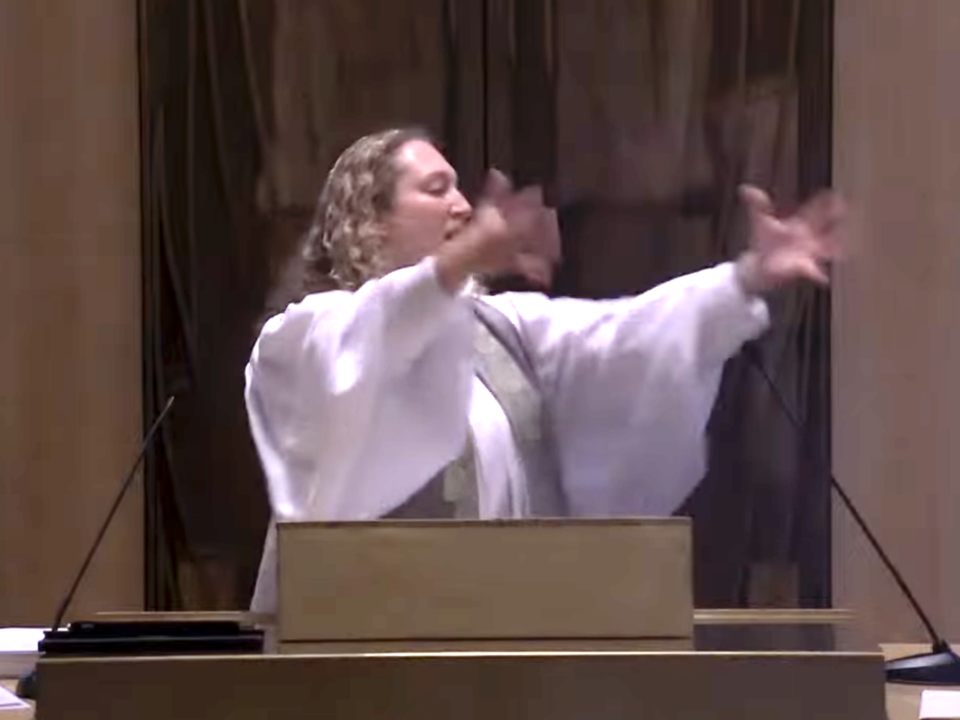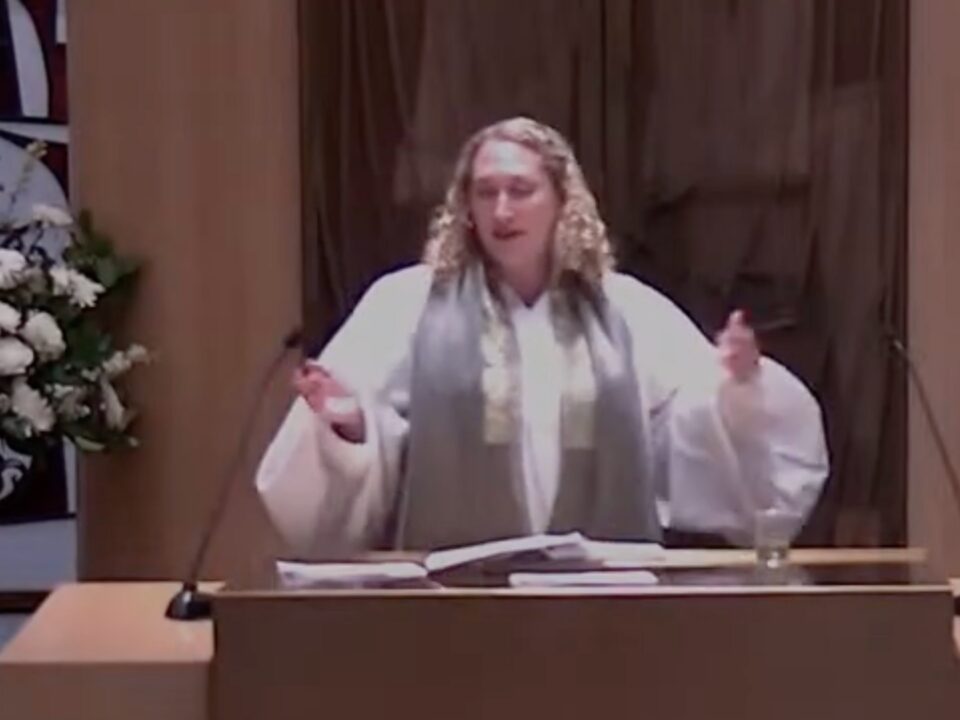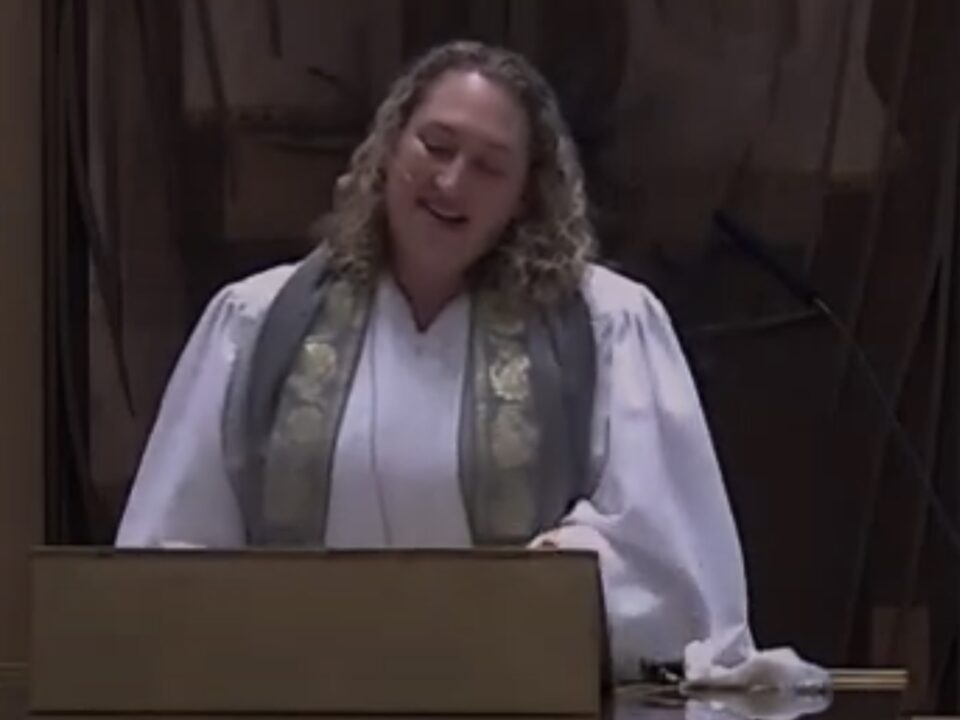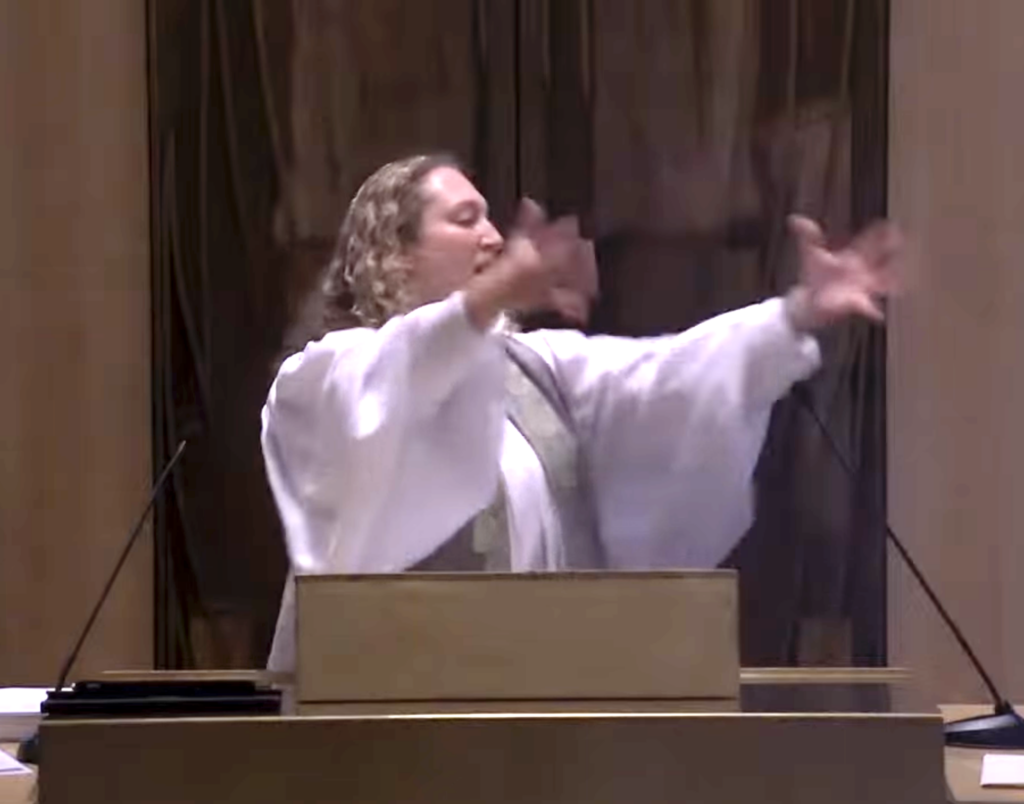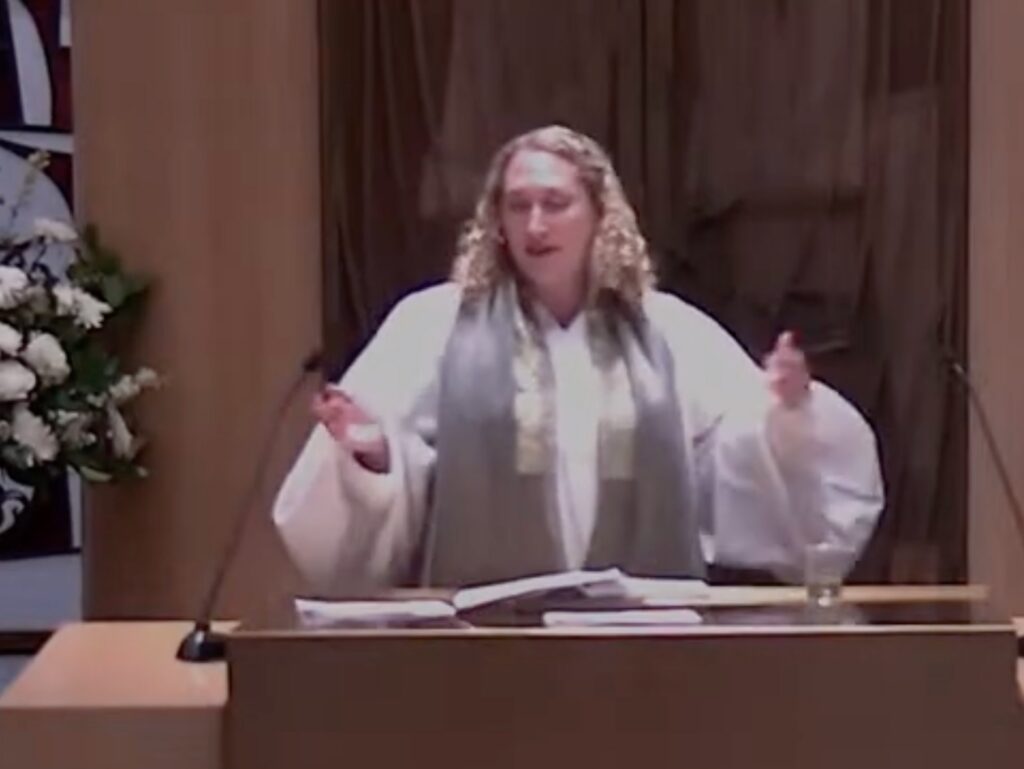
Rabbi Sirkman’s Sermon for Kol Nidre 5786/2025
October 3, 2025
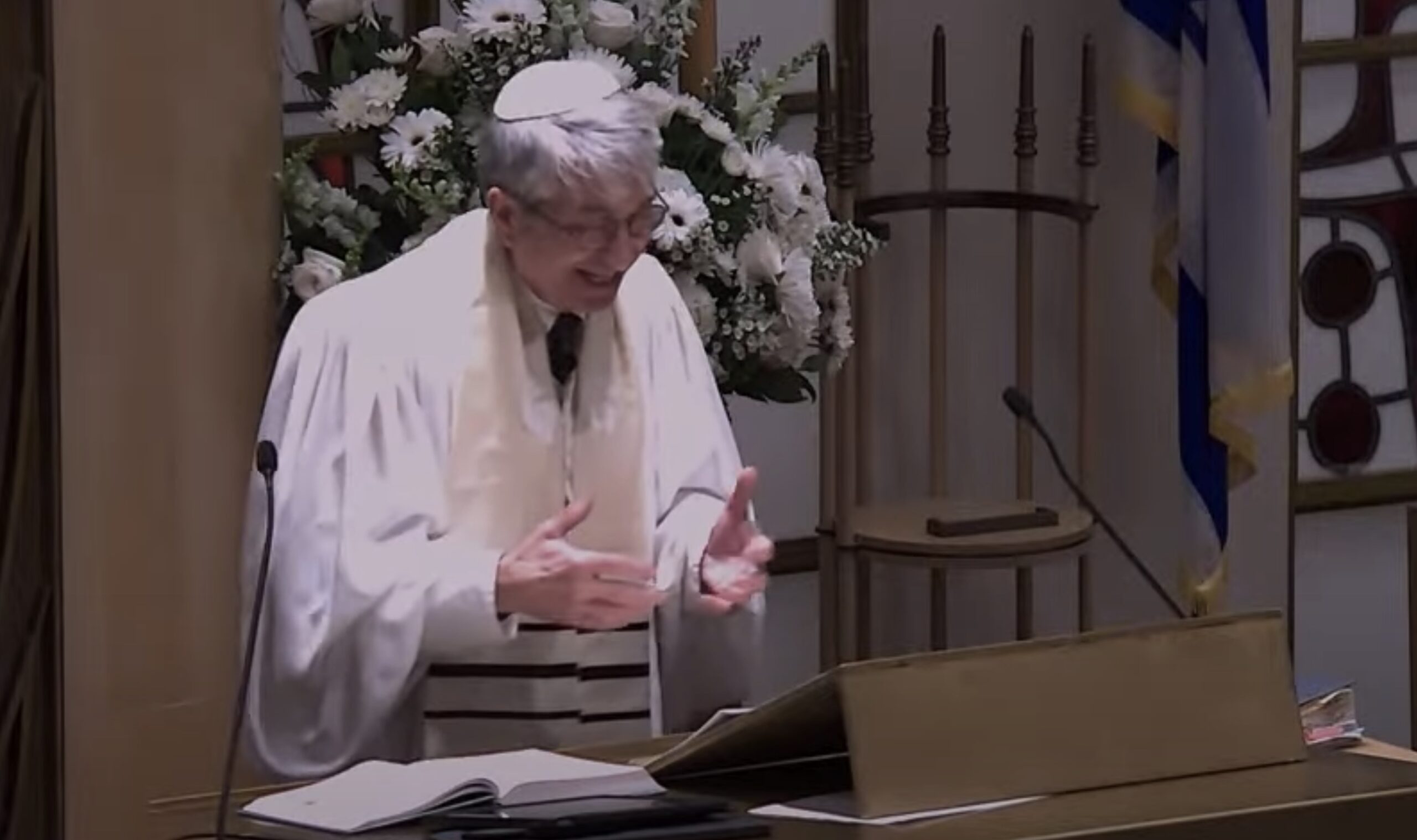
Rabbi Frankel’s Sermon for Erev Rosh Hashanah 5787/2026
September 11, 2026
Jewish Joy When We Need It Most
Rabbi Frankel Yom Kippur sermon 5786
Growing up, whenever something bad or just disappointing would happen, my dad would shrug his shoulders, chuckle and tell us, “Shver tsu zayn a yid!” – in Yiddish, “It’s tough to be a Jew!” You lost a game of cards? Shver tsu zayn a yid! We’re out of milk? Shver tsu zayn a yid! It was a playful mantra in our home, a very particular kind of dad joke, making light of situations that clearly weren’t tragedies, while also subtly underscoring the historic suffering of our people.
I learned only recently–too late to tell my dad, who maybe already knew–that his maxim was also the title of a 1914 tragicomic play by the great Yiddish writer Sholom Aleichem about the difficult and often dangerous relationships between Jews and their Gentile neighbors in the Russian Empire. (1) Though far from Fiddler on the Roof fame, Shver tsu zayn a yid captured some of those same themes: Jews in the Pale of Settlement facing discrimination in academia and their professional trades, a constant threat of violence, and the small daily risks they took trying to blend into secular society but often getting picked out and picked on. Sound familiar?
Whether or not my father knew the play, he certainly understood that ethos of Jewish angst referenced by his own punchline. The sole child of Holocaust refugees from Vienna, my dad, Jules, grew up in a tiny tenement in Washington Heights, the memory of the Six Million always hovering close by. For his family, who lost so many in the Shoah, “Shver tsu zayn a yid” rang painfully true, which is why my father spent much of his too-short 62 years of life ensuring that his children’s experience of being Jewish in the world was the exact opposite.
He sadly never made it to seminary, but my dad was like a rabbi to many during his life, and very much the reason I became one. An accountant by day, Jewish musician and community organizer by night, he was “the music man” at our Hebrew school on Sunday mornings, a composer of prayer melodies, artistic director of Israeli folk festivals, and for years the spiritual leader of a local chavurah. Nowhere was my dad more in his element, though, than leading our family Seders. They were epic, multi-hour musical affairs for which my father basically rewrote the entire Haggadah to sing through every Seder step. He’d spread out percussion instruments that my parents collected from around the world and everyone at the table had to play something as we “sang for our supper” late into the night. You see, in our family, being Jewish was fun, and it was easy. So in my youth and even through most of my adult life, I never really understood why my dad was always so worried that the next generation of Nazis might be waiting in the wings.
But the illusion that anti-Semitism was a thing of the past finally began cracking around the edges several years ago and then shattered completely on October 7, 2023, as I know it did for so many of you. Ironically, it was in Israel last summer, studying at the Shalom Hartman Institute in Jerusalem, that the stark reality here fully started to sink in for me. Between the two rabbinic seminar weeks, I had the chance to spend a Shabbat off with close Israeli cousins, another branch of my grandmother’s Austrian refugee family who fled to what was then Palestine. Now they are three generations of Israelis, some with children or grandchildren in IDF uniforms and others awaiting their draft papers.
I showed up in Nes Tziona that Friday night with a sweet challah from the shuk and bracing myself to face my cousin’s existential fears and pain, at that point only nine months post-October 7th. Yet the conversation quickly took an unexpected turn. Although they were the ones in the midst of a raging war, my cousins began to press me about the dangers of life here: “Are you sure you’re safe being a rabbi in New York?” one questioned. “Do you still keep a mezuzah up on your door? Isn’t it too dangerous now?” another quizzed. “What is happening on all these college campuses to Jewish students?” And on and on and on. It was strange: for all the anxiety I’d had about my Israeli family all those months, they were worried about us. That night, I tried to reassure them that I was fine, that we were fine… but the truth is, we’re not.
To be sure, the dystopia of our American Jewish reality has surpassed my Israeli cousins’ wildest nightmares: Jews gunned down on the streets of DC, torched on a solidarity walk through Boulder or attacked in their own homes. But it’s the subtler signs of the times that nag at me most: talking to congregants who report their college kids won’t set foot in a Hillel building for fear of being pigeon holed by their peers or worse; our nursery parents who wonder if their four-year-old, if my four-year-old, would be safer coming to school here with a daily policy presence out front. Hearing from peers in new jobs that they feel it’s probably best not to let their colleagues know they’re Jewish, or being told by a Temple teen that they tuck in their Jewish stars while riding the city subway, just to be safe. I share these genuine fears, as anti-Semitism again rears its ugly head from the far right, the far left, and seemingly everywhere in between.
But there’s been another incredible and counterintuitive trend that we’ve also witnessed over the past two years, and sadly, it’s getting far less press. For as the ADL statistics soar for reported acts of anti-Semitism in the US (2), there has also been a pronounced parallel surge in Jewish participation and pride, documented by a recent Jewish Federation study (3) and heaps of anecdotal evidence, including right here at LT where at nearly 900 family units, we’ve never been bigger. Some sociologists have dubbed these newly motivated Members Of The Tribe “October 8th Jews,” though I personally don’t love that term, and of course, most were technically Jews on October 6th too. (4)
Amazingly, though, some weren’t born Jewish and are choosing it now, both in spite and precisely because of all our people are facing. Our LT congregant and my colleague Rabbi Lisa Rubin, who directs Central Synagogue’s Center for Exploring Judaism, the largest program of its kind in the world, reported that over the past two years, the center has guided more conversion candidates than ever before. I had the privilege this summer of participating in one of those conversions with Lisa, serving as a rabbinic witness as a mensch of a man chose to cast his lot in with the Jewish people at a time when the decks feel stacked against us. Long partnered to a Jewish spouse, he expressed feeling in his kishkes what so many of us have as well–a longing for Jewish community in a time of intense isolation and an impulse to stand up, to publicly and proudly affirm our Jewish identity. And the most moving moment of the conversion was when our candidate proudly showed off his big new Magen David that he refused to tuck in!
Jewish historian and US special envoy Dr. Deborah Lipstadt hit the nail on the head in a NY Times OpEd she wrote: “We must know what we are protecting from assault,” she advised. “[And] we must be motivated far more by our love for the insights, wisdom and joy embedded in Jewish culture than by the fight against those who harbor an insane hatred of it.” (5) How prescient were Lipstadt’s words, actually penned just a few weeks before that fateful day in Israel. Even back in September of 2023, she understood–much like my own father growing up in the shadow of the Shoah–that the best way to respond to those who, for whatever reason, hate Jews, is for us to double down on our love of Judaism, to immerse ourselves in what I’d call Jewish joy.
The Book of Psalms famously promises, “Ba’erev yalin u’vaboker, rinah– weeping may tarry for the night; yet joy will come in the morning.” (6) But these days joy feels rather elusive. It doesn’t always just land on our doorstep, certainly not with the morning paper and its daily distressing headlines. We might even question if it’s appropriate at all to rejoice with others in pain. And we’re not the first to grapple with this. During a time of terrible plague, the great Chassidic master Reb Nachman of Breslov was once asked by his disciples: “Rebbe, how can we possibly sing and dance when people around us are suffering? It doesn’t seem right,” they protested. Reb Nachman advised them: “If, when we look around the world right now, we see sorrow and darkness… if it feels hard to find reasons to celebrate, then we must borrow a measure of joy from the future. For this is precisely the moment we need it most.”
This summer, in the spirit of Reb Nachman’s wisdom, I set out on a search for Jewish joy, a tour of 4 Jewish summer camps in 4 consecutive weekends. Setting out for each road trip, our minivan packed to the gills, I wore multiple hats both literally and figuratively. I was a mom on a mission, scouting out future sleepaway options for my two daughters, each with very different needs, but both of whom I’m eager to give that life-changing experience. Wearing my rabbinic kippa, I was excited to visit a number of our LT kids at their “happy place” where I hope to serve on faculty, and to revisit the camps that so formatively shaped me as a young Jew and aspiring leader. And if I was lucky, along the way, perhaps I’d even replenish my own well of Jewish joy a little.
Driving through the gates of every camp, all far more guarded now than in my years, we would enter “the bubble” as the kids call it, granted brief access for these forays of spiritual espionage into little magical worlds. All four camps shared common structures: a dining hall, cabins, grassy fields and flagpoles, gathering places indoors and outside, all with peeling painted plaques chronicling the camp’s history. Yet each camp, affiliated with different movements, had its own unique flavor of Jewish joy.
My own two Young Judaea alma maters–Sprout Lake and then Tel Yehudah, the national high school leadership camp where Rabbi Sirkman and I both spent transformative summers–are religiously pluralistic or non-denominational, defined most by their Zionist identity: an emphasis on Jewish and Israeli culture. Driving down the big hill at Tel Yehudah’s entrance is like rolling into little Israel on the Delaware; blue and white Israeli flags and now yellow ribbons festooned along the walkways, madrichim or counselors with thick Israeli accents and Hebrew tattoos welcoming you in, and Israeli rap music blaring from the ram-kol or camp speakers. In the July heat, it felt as much like Tel Aviv as Barryville, NY.
Camp Ramah in Palmer, MA, which hosts a flagship special needs inclusion program in addition to its mainstream offerings, had a slightly mellower vibe. Among the hundreds of equally happy campers, we noticed more wore yarmulkes while playing soccer, looping their lanyards or lining up for the canteen. At this Ramah, they swam in the lake, not a pool, the prayerbooks were just a little thicker and the camp plays are performed entirely B’Ivrit– in Hebrew. Our favorite part of that visit, certainly Miriam’s highlight, was the barnyard area filled with animals and a vegetable garden which stood in the center of one side of camp like a pop-up kibbutz. As we walked through on our tour, we were regaled by a chatty young woman with tales of the summer’s cheeky donkey as a bunch of middle-schoolers baked fresh pita at a nearby fire pit while chanting their catchy group cheers.
The pinnacle of our Jewish joy pilgrimage this summer was decidedly at our URJ Camp Eisner, just an hour due West of Ramah in Great Barrington, MA. Eisner, like its sister camp Crane Lake, and all of our movement camps across the country, is a living laboratory of Reform Jewish values, a place where generations of Jewish youth get their first taste of a true covenant community and yes, a treasure trove of Jewish joy. Before bringing Judith for a trial “Rookie Day,” we had the chance to join the Eisner Camp community for its Friday night festivities, a night we’ll long remember.
We arrived just after Shabbat dinner as all of camp, dressed in white, made their way to the outdoor prayer amphitheater for Kabbalat Shabbat led by faculty clergy and musicians. Looking around, it felt like a field full of actual angels had descended from on high as we sang Shalom Aleichem. Everywhere you turned, kids were singing and swaying along, belting out each prayer with its requisite (and complicated!) hand signs, a whole secret language of Jewish joy that they come home from camp fluently speaking.
After services, “Shabbat sha-brownies” were distributed and immediately devoured on the walk across camp to the Beit Am to quickly refuel for the song session, which I can only describe as a giant Jewish mosh pit music party to the tunes of Debbie Friedman, Elana Arian and more. And to cap it off, the night crescendoed with an outdoor Israeli dance marathon under the stars, throngs of 16-year-old Olim boys leading the choreography. It was Jewish joy on steroids. It was also the starkest possible contrast to the painful images that have flooded our screens this past year, and a harbinger of a brighter Jewish future, just what Reb Nachman prescribed.
These snapshots from my Jewish summer camp tour all embody the last recorded words of philosopher, poet, and modern prophet Rabbi Abraham Joshua Heschel. At the end of his final live TV interview in 1972 with journalist Carl Stern, only weeks before his death (and aired posthumously), Heschel summed up his wide-ranging spiritual wisdom by simply saying: “Remember… that life is a celebration.” (7) Or as this morning’s Torah portion urges us, especially on this day when we face our own mortality, Judaism offers us a guidebook full of ways to “choose life,” (8) to insist on the possibility of joy. For Heschel in his time, for my father, and I believe for us today as well, Jewish joy is not a Pollyannaish denial of reality but rather an intentional and quite serious act of spiritual resistance. It is a refutation of both Hamas’s death cult and of the potentially consuming despair the tragedy of Israel’s ongoing war has wrought.
Zooming out, what are the ingredients that make these Jewish camps, every camp really, so magical? It’s the freedom, of course, of being in a world without many grownups, untethered from the burden of technology and released from the pressures of the school year. But it’s much more than just what’s absent that imprints memories on our souls, which endure for decades. It’s the elaborate, multisensory and sometimes strange rituals, their origins not always known, but whose enactment each year tugs at a powerful chain of tradition. It’s the elevation of sacred time, the anticipation of precious peak moments each session or the smaller special customs that mark every day’s beginning or end. It’s the circles of supportive community, knowing that you can be your authentic, quirky, full self, and you’ll be embraced. And it’s the experience, taken all together, of feeling connected to something much bigger than yourself, something I’d call holy.
But here’s the big secret: you don’t have to be a 10 or 15-year-old at sleepaway camp to experience some of what I’ve described. Jewish joy and inspiration that we all so need right now are not reserved just for kids; they’re available to us no matter our age, no matter the season. Step into the Jacobson on a Thursday at lunchtime when our L’chaim program is buzzing with that energy, all of us “children at heart!” Or volunteer with our social action committee and family mitzvah corps who pray with their feet and hands and heart; you’ll feel the Jewish joy. If you’re seeking a weekly dose, join us on Tuesday nights for the year-long B’nai Binah adult learning journey kicking off next week.
Or come out to New Rochelle for just one Saturday evening on November 8 to the Westchester-wide Night of Jewish Learning, where you’ll have a choice of thirty rabbis to learn from and a chance to channel that summer camp spirit at the end of the night, with Israeli dancing led by yours truly. Because Jewish joy in inherently communal; it is what is possible only when we come together to appreciate God’s gifts and share generously of ourselves. Sure, maybe we can be happy for a while on our own, but as David Whyte puts it, “Joy is a meeting place… [It is] the claiming of our place in the living conversation…I was here and you were here and together we made a world.” (9) You don’t need a whole crowd; just two people and the sacred space between them.
I learned this first and foremost from my dad, whose 10th yahrzeit I’ll be marking this month. Long before I left for sleepaway camp, I’d accompany him each Saturday morning to shul (except in those weeks before April 15- it was busy season). The truth is, it didn’t much matter what the Cantor was singing or the Rabbi saying, because my sweetest memory is this: being enveloped in my dad’s big woolly tallit like a huge hug straight from God. I’d twist its fringes around my little fingers, and like a classic forget-me-not string tied around our pointer, when I looked down, I’d remember that I was loved. His tallit, this tallit, is the one I now have our LT parents and grandparents hold up as a tent of blessing over our children at Tot Shabbat, connecting us across the generations in a canopy of Jewish joy.
It may not always be easy to be a Jew, and there is no telling what lies ahead for us or for Israel in the coming months. But I pray that in 5786, Jewish life and this community in particular, will be a source of nourishment and meaning, of community and much-needed joy for us all.
Gmar Chatimah Tovah, may we be sealed for goodness in the Book of Life.
(1) https://www.nytimes.com/1973/10/30/archives/theateraleichems-hard-to-be-a-jew-play-is-set-to-music-by-sholom.html
(2) https://www.adl.org/resources/report/audit-antisemitic-incidents-2024
(3) https://www.jewishfederations.org/blog/all/federations-new-study-490865
(4) https://www.commentary.org/articles/dan-senor/american-jewry-after-october-7/
(5) https://www.nytimes.com/2023/09/14/opinion/antisemitism-jewish-pride.html
(6) Psalm 30:5
(7) It is well worth watching the full, inspiring interview.
(8) Deuteronomy 30:19
(9) Whyte, David. Consolations: The Solace, Nourishment and Underlying Meaning of Everyday Words, Many Rivers Press, 2014.